Yukon firewood resource

Fuelwood Harvesting Guide

A Yukon-focused guide to the work, effort, stewardship, winter conditions, and low-impact thinking behind responsibly harvested firewood.

Fuelwood Harvesting Guide

Every load of firewood begins long before delivery. Long before a neatly stacked pile appears beside a driveway, there is travel, planning, weather, equipment, hard physical work, and a series of decisions about how to harvest responsibly.

This guide explores the work, effort, stewardship, and winter harvesting realities behind Yukon firewood — from walking into the bush on snowshoes to thinking carefully about low-impact equipment and forest protection.

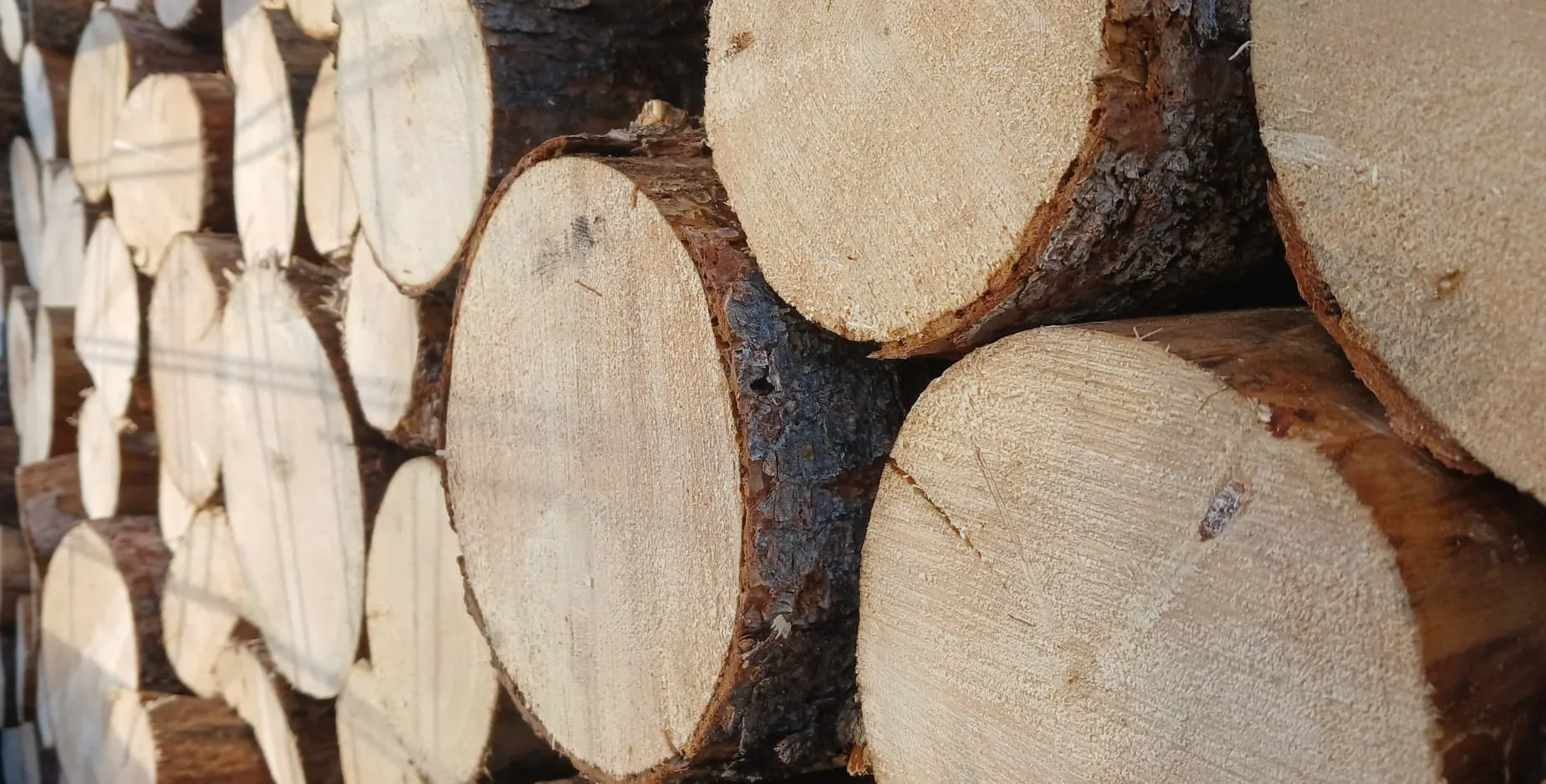
Bucked spruce from a Yukon fuelwood harvest ready for processing

Part 1 — Where It Began

Most loads of firewood begin long before the chainsaw starts. Long before the truck. Long before the trailer. Long before the customer receives a neatly stacked pile of wood beside their driveway.

For me, the story began in the winter following my move to the Yukon. Like many newcomers, I arrived with enthusiasm, ideas and a somewhat unrealistic understanding of how much work northern life could involve.

At the time, my harvesting operation consisted of:

  • A borrowed Nissan Frontier
  • A small single-axle trailer
  • A chainsaw
  • Snowshoes
  • Determination
  • And not much else

The challenge seemed straightforward: find dead standing timber, cut it, bring it home, buck it, and sell it. Reality had other ideas.

The Walk In

People often imagine harvesting beginning with the chainsaw. In reality it usually begins with a walk. The Yukon contains vast areas of forest, but not every tree can be harvested. Commercial harvesting takes place within designated permit areas, often requiring significant travel before a single tree is cut.

Once the vehicle stops, the real work begins:

  • Deep snow
  • Uneven terrain
  • Hidden stumps
  • Windfall
  • Creeks
  • Overflow
  • Cold temperatures

Many of my early days involved snowshoes and a plastic sled. The process was brutally simple: cut a tree, buck it into lengths, load a few pieces onto the sled, drag them back, and repeat. Again and again.

Each trip moved only a tiny amount of wood, perhaps a sixteenth of a cord at a time. At the end of the day there would be a small pile beside the trailer and a growing appreciation for why firewood costs what it does.

Learning What A Cord Actually Means

A cord is often described as 4 feet × 4 feet × 8 feet. It is a simple measurement, but the reality feels different when you're moving it by hand.

A cord is not simply a stack. It is hundreds of individual decisions, hundreds of cuts, hundreds of lifts, and hundreds of metres walked through snow. A cord has weight. A cord has distance. A cord has time.

The first few cords taught me a lesson that every firewood producer eventually learns: Wood heat is stored human effort. Every stick in a woodpile arrived there because somebody moved it, usually more than once.

The Yukon Changes Your Thinking

The Yukon has a habit of changing plans. Machines that worked perfectly yesterday refuse to start today. Roads that looked frozen become soft. Weather forecasts become suggestions rather than predictions.

Equipment choices begin to revolve around one question: How do I move more wood while disturbing less ground?

The challenge isn't simply harvesting. The challenge is harvesting responsibly.

What Does Responsible Harvesting Look Like?

People sometimes imagine harvesting as a process of clearing forest. The reality is often much more selective. My long-term objective has always been to remove as few healthy trees as possible.

Not because trees should never be cut. Trees are a renewable resource and firewood remains one of the most sustainable heating sources available when harvested responsibly. The goal is simply to maximise utilisation while minimising unnecessary impact.

That often means:

  • Prioritising dead standing timber
  • Recovering windthrow
  • Utilising damaged trees
  • Selecting removals carefully
  • Protecting residual forest

Every site is different. Sometimes a healthy tree must be removed to gain access. The objective is to make those situations the exception rather than the rule.

The Evolution Of Equipment

Every firewood producer eventually begins imagining better ways to move wood. The first improvement is usually obvious: a larger trailer, a more capable truck, or a better chainsaw.

Then the ideas become more ambitious. What if the logs could be moved mechanically? What if the handling could be reduced? What if fewer trips across the forest floor were required? What if the impact on the site could be reduced while simultaneously increasing productivity?

Those questions have shaped a continuing search for equipment that balances:

  • Productivity
  • Soil protection
  • Manoeuvrability
  • Cost
  • Reliability

The destination may eventually include:

  • Compact utility tractor
  • Forestry trailer
  • Hydraulic crane
  • Kesla processor
  • Low ground pressure operation

Not because bigger machinery is always better, but because every unnecessary lift is effort, every unnecessary trip is time, and every unnecessary pass across the ground has an impact.

Winter Harvesting Is Different

Most people imagine winter as a disadvantage. In forestry, winter often creates opportunities. Frozen ground can protect sensitive soils, snow can reduce disturbance, and access may actually improve in some locations.

At the same time, winter introduces its own challenges. Hydraulics move slower. Batteries work harder. Steel becomes less forgiving. A task that takes five minutes in summer may take twenty in January. The forest demands patience.

Why People Still Do It

This is the part that is hardest to explain, because if fuelwood harvesting was only about economics, very few people would choose to spend a Yukon winter doing it. There are easier ways to earn a living.

But there is something deeply satisfying about the process: a stand of trees, fresh snow, the sound of a chainsaw in cold air, the smell of spruce, and the sight of a neatly stacked woodpile.

There is satisfaction in knowing that the heat from those logs will eventually warm a home through another Yukon winter. Firewood is one of the few products where the connection between effort and outcome remains completely visible. Every cord tells a story, and every winter adds another chapter.

How Much Energy Is Stored In A Cord Of Firewood?

A neatly stacked cord of firewood doesn't look particularly remarkable. Yet hidden within that pile is an extraordinary amount of stored solar energy.

Every piece of firewood began as sunlight. Through photosynthesis, the tree captured energy from the sun and stored it within its wood fibres over decades of growth. When the wood is eventually burned, that stored energy is released as heat.

A single cord of seasoned birch can contain energy roughly equivalent to thousands of kilowatt-hours of electricity. Viewed another way, a woodpile is simply a battery charged by the sun over many years and discharged slowly through the winter.

Why Moving Logs Is Harder Than Cutting Them

When people imagine forestry work, they usually picture chainsaws. The reality is that cutting the tree is often the easy part.

The real challenge begins once the tree is on the ground. Every log must be moved, often multiple times. It may be dragged to a trail, loaded onto a trailer, unloaded for processing, stacked for drying, loaded again for delivery and finally stacked once more by the customer.

This is why cranes, processors, winches and trailers matter. They are not simply about working faster; they are about reducing handling. In fuelwood harvesting, efficiency is often measured by how few times the wood needs to be touched afterwards.

Why Winter Is Often The Best Time To Harvest

To many people, the idea of spending a Yukon winter in the forest sounds like a hardship. In reality, winter is often the preferred season for fuelwood harvesting.

Frozen ground acts like nature's protective mat. Areas that would be soft, muddy and easily damaged during summer become firm enough to support equipment with minimal disturbance. Snow helps protect vegetation, reduces rutting and allows access to areas that might otherwise be difficult to reach.

Winter also changes the atmosphere of the forest itself. The woods become quieter, wildlife tracks appear overnight like pages in a newspaper, and harvesting becomes less about fighting the environment and more about working with it.

What Is Low-Impact Harvesting In The Yukon Winter And Why Does It Matter?

When people hear the word "forestry", they often picture large machines, wide trails and extensive harvesting operations. In reality, forestry exists across a wide spectrum. At one end are large-scale commercial operations supplying mills and processing facilities. At the other are smaller fuelwood operations focused on producing firewood while maintaining the long-term health and character of the forest.

Low-impact harvesting is not defined by a specific machine or technique. It is a philosophy. The objective is simple: harvest the wood that is needed while creating as little unnecessary disturbance as possible.

In practical terms, this often means:

  • Using existing openings where possible
  • Removing as few healthy trees as necessary
  • Protecting soils and root systems
  • Minimising trail widths
  • Reducing repeated traffic through the stand
  • Preserving desirable residual trees
  • Maintaining the appearance and ecological function of the forest

Winter provides a unique opportunity to achieve these goals in the Yukon. Frozen ground and snow can dramatically reduce soil disturbance compared to summer operations. Areas that might be vulnerable to rutting and compaction during warmer months can often be traversed with far less impact when conditions are right.

Low-impact harvesting does not always mean working more slowly. In many situations, carefully selected equipment can improve both productivity and forest protection. Narrow, manoeuvrable machines equipped with cranes, winches or forestry trailers may be able to access timber without creating the wide corridors often associated with larger machinery.

This approach is not unique to the Yukon. Scandinavian forestry systems, including those in Sweden and Finland, offer useful examples of how long winters, snow, wetlands and sensitive forest ecosystems can shape increasingly sophisticated low-impact harvesting techniques.

The Yukon is different in many ways, but the underlying principle remains the same. Forests are not simply a resource to be extracted. They are landscapes that future generations will continue to work in, enjoy and depend upon.

Ultimately, the goal is not simply to produce firewood. The goal is to produce firewood while ensuring the forest remains productive, beautiful and ecologically functional long after the last load has left the site.

From Forest To Woodpile

If you are interested in responsibly harvested Yukon firewood or want to understand how wood is sourced, this guide explains why the process matters from forest to woodpile.